My Approach
Shared leadership
can achieve great things.When it fits the people involved.
I know both sides: the remarkable strength that emerges when two people combine their skills, and the friction that arises when roles, decisions or expectations remain unclear.
That is why I developed the Shared Leadership Architecture . It is not a rigid template but a clear path along which we work out what you actually need and design a form of leadership that stands up to daily reality.

Experience
that makes good design
possible.
I’m Amrit Rescheneder.
I have led people and teams for more than ten years, several of them in shared leadership roles.
What you gain
Less friction, more clarity and greater collective impact
Two strong leaders bring a great deal to the table. For their strengths to work together, they need clarity about roles, decisions and collaboration. That is exactly where my approach begins.
Decisions take longer because no one knows who has the final say and when.
→Clear decision rights help you move faster and act decisively.
Tasks are duplicated or fall between two people who are both supposedly responsible.
→Clearly defined roles create focus and reliable accountability.
The team and stakeholders receive conflicting messages.
→Shared guidelines provide direction and a strong united presence.
Coordination drains energy, and tensions are addressed too late.
→Well-designed routines ease daily work and make conflicts manageable early.
The shared role relies heavily on personal effort and improvisation.
→A sustainable architecture makes leadership more stable, resilient and able to evolve.
The goal is not for two people to do everything together all the time. It is to share responsibility without sacrificing clarity, speed or commitment.
Three levels
Shared leadership does not start by dividing a job.
It starts by asking how people want to share responsibility and what support they need from their organisation. My approach therefore looks at three levels.
Ambitions
Ways of working
Skills
Expectations
Interfaces
Environment
leadershipRoles
Decisions
Communication
Accountability
The people
Are leadership philosophies, ambitions, working styles and skills compatible? Can differences be discussed openly?
The shared leadership
Who is responsible for what? How do the leaders decide, communicate and act as one towards the team and stakeholders?
The organisation
Are the mandate, expectations and interfaces clear? Does the environment genuinely support the shared role?
Only when these three levels work together
can several leaders become one strong leadership system.
The Shared Leadership Architecture
Five steps from idea to everyday practice
The underlying logic stays the same. How we apply it depends on whether we are working with an organisation, a leadership tandem or founders.
Identify the leadership challenge
We clarify why responsibility should be shared and what specific problem the change needs to solve.
Outcome: One shared goal instead of conflicting expectations.Assess alternatives and suitability
We examine the task, the people involved and the environment, and assess openly whether shared leadership is really the best solution.
Outcome: A well-founded decision for or against the model.Agree on the architecture
We design the mandate, roles, areas of responsibility, decision rights, interfaces and conflict procedures.
Outcome: Clarity about who is accountable for what and how decisions are made.Test it in everyday work
We develop suitable routines for communication, information-sharing, meetings and external representation, then test them under real conditions.
Outcome: A shared leadership practice that works beyond the document.Review and embed
We take an honest look at impact and collaboration, strengthen what works and change what is not yet working.
Outcome: A tested system that can grow with its responsibilities.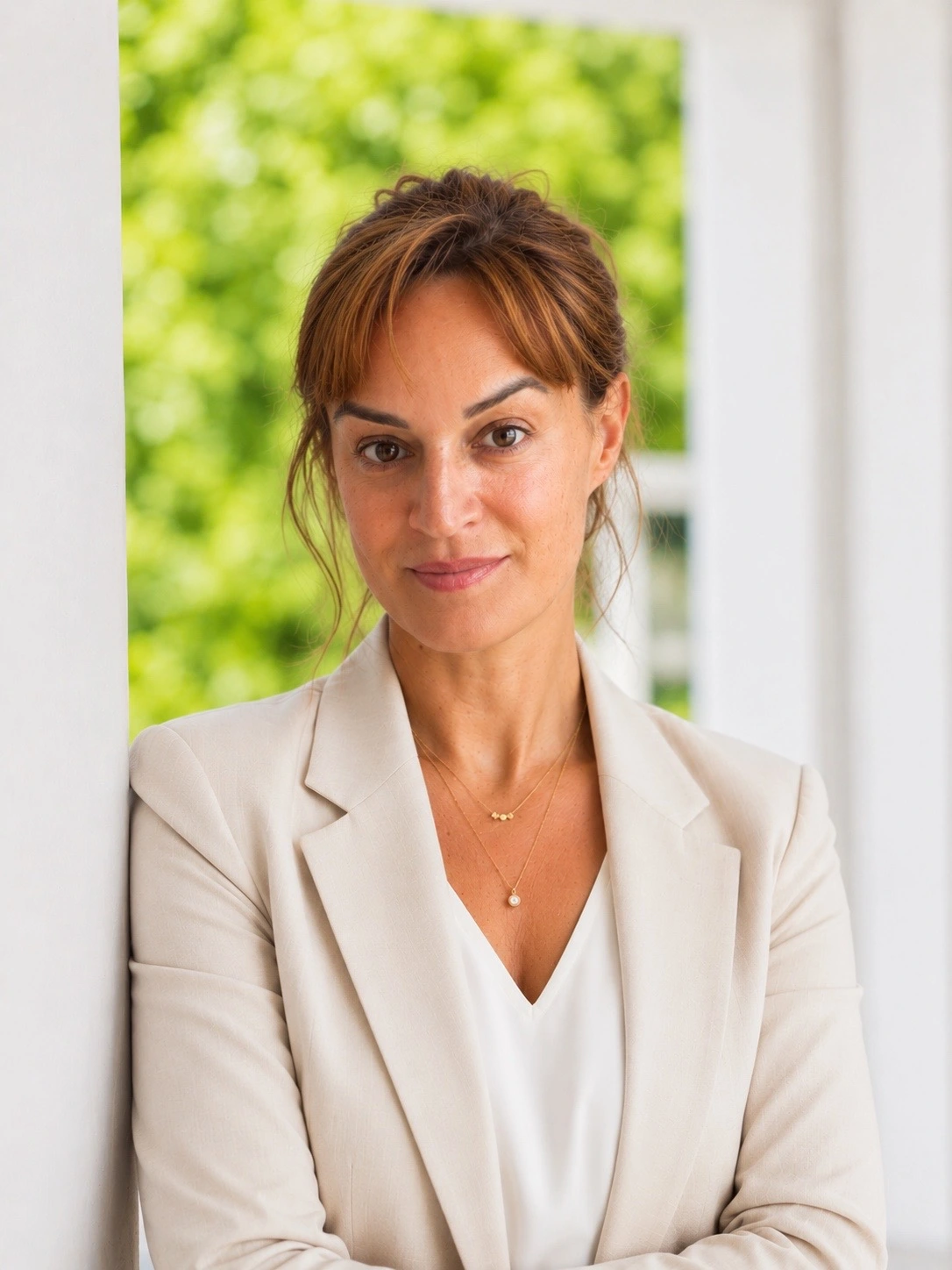
Tailored & tested in practice
Not a template, but a clear direction.
Every organisation is unique. A dual leadership arrangement in a large corporation needs different rules from two founders. A new leadership tandem faces different questions from a duo that has worked together for years.
In practice, we design a suitable architecture together, test it and refine it based on real experience.
In my own experience as a shared leader, I learned what makes a duo strong and where good intentions are simply not enough. From that, I developed a system that turns theory into practical leadership.
Find out more about me →One approach, three paths
Where would you like to make shared leadership work?
Shared leadership for organisations
Assess shared leadership, introduce it professionally and embed it in the organisation, from readiness to reliable governance.
Shared leadership for organisations →90 days to one shared leadership system
Over 90 days, bring roles, decisions, communication and trust together into a coherent leadership system.
Explore the 90-Day Shared Leadership Programme →Build a strong leadership partnership
Clarify responsibility, decisions, power and your shared future, then set them out as binding commitments in a Founder Charter.
Explore the Co-Founder Programme →FAQ
What you need to know about the approach.
Is the approach only suitable for organisations?
No. It is adapted for organisations, leadership tandems and founders.
Does it work for an existing dual leadership team?
Yes. Everyday work is where gaps in roles, decisions or organisational support become visible.
Must every decision be made jointly?
No. We deliberately distinguish individual, consultative and joint decisions.
How long does the support last?
That depends on the goal. Leadership tandems can be supported over 90 days; organisational implementation often takes several weeks.
What happens if shared leadership is not a good fit?
I will say so openly. A well-founded decision against the model can be a valuable outcome too.
Why should you choose my approach?
Because I know shared leadership from more than theory. I have spent over ten years in leadership positions, including several years personally sharing leadership responsibility. My international career has also exposed me to different organisations, structures and working cultures. I combine this practical knowledge with sound research and a clear approach that makes shared leadership workable day to day.
What makes my work different from other offerings?
I have spent several years working in shared leadership myself. My approach brings together three levels: the people involved, their joint leadership practice and the supporting organisation. I combine current research with firsthand experience of shared responsibility. You get no standard template, but an architecture that fits, along with an honest assessment if shared leadership is not the best solution for your situation.
The next step
Understand first, then design.
In a free 30-minute conversation, we clarify your starting situation, the specific bottleneck and the most useful next step.
- We look together at your current situation.
- You receive an honest assessment and a clear recommendation.
- You decide in your own time whether and how to proceed.